Showing posts with label Coursera Blog. Show all posts

Tuesday, January 24, 2023

Remote Leadership: Q&A with Darren Murph, Head of Remote at GitLab

om shanti : motivational speaker

Modern leadership skills, such as strategic thinking, emotional intelligence, resilience, and agility, have changed significantly with remote work and digital transformation. 

Our latest research, Making of a Modern Leader: Do Your Employees Have the Skills To Lead Through Change? explores what leadership means today and the skills our employees need to connect, inspire, and thrive. The research draws upon a survey of 1,000 people managers globally, trends from Coursera learners, and insights from remote leadership champion GitLab.

In the following Q&A, Gitlab’s Head of Remote Darren Murph, expands upon some pressing questions about leadership in remote working environments. For more about GitLab’s remote leadership practices, check out their “How to Manage a Remote Team” course on Coursera. 

Here is what Darren has to say about remote leadership in today’s rapidly changing world of work:

What are the key differences between in-person and remote leadership?

Darren Murph: Remote leadership should overall be more intentional. With in-person leadership, systems are created to optimize the speed of knowledge transfer (e.g., How fast can Person A tap Person B on the shoulder and receive an answer?). With remote leadership, they are created to optimize the speed of knowledge retrieval (e.g., How can we design knowledge systems so Person A and Person B can seek and find information regardless of time zone or availability?). 

Remote leadership should also involve the planning of more intentional in-person interactions, which are vital moments that should not be overlooked or purged from a team’s budget. It should also seek more input from teams through public tools. GitLab, for example, enables everyone to contribute ideas, input, and feedback through comments on the platform, even if you aren’t the person who created the idea. 

What are four things every remote leader should get into the habit of doing?

Darren Murph: First, in every scenario, ask, “What do I not know?”. Second, hire for weaknesses. Know your energy vampires and focus on hiring others who receive energy by doing that very work. Third, be eager to learn, change and grow. You need to be interested in evolving as a leader to keep up with the changes in technology and employee needs that come with it. Fourth, value your rest ethic as much as your work ethic. Rest is not in competition with work. 

What advice would you give a learning leader looking to upskill teams in leadership?

Darren Murph: Leaders today should see each of their peers and direct reports as whole human beings, not just colleagues. Getting the most out of a report involves a deeper understanding of their purpose portfolio. Work is a slice of that portfolio but not the entire portfolio. Seek to understand what makes them who they are, what gives them energy, and what they seek from work. Today’s workplace leaders must first be willing to be led to a place of human understanding. 

Could you share some leadership tips for someone managing a remote team they’ve inherited?

Darren Murph: Absolutely. First and foremost, don’t box people in. Each person is an individual and has nuanced motivations. Discover theirs and unlock their potential. Second, ask how you can be helpful. Don’t assume that the leadership style you prefer is the one that works best for them. Finally, do not relent on documentation. A memos-over-meetings culture creates an atmosphere where business results can be decoupled from linear time, leading to more flexibility and a sense of control. 

How do you have high-impact conversations remotely?

Darren Murph: Start with a document. Writing forces clarity of thought. When you write what you’re planning to converse about, it leads to more precision, and it enables more parties to contribute input to the topic at hand. Also, be clear in your ask when scheduling synchronous time for conversations, and include an agenda with the aforesaid document in the calendar invite. 

What is essential in remote leadership to navigate uncertain times?

Darren Murph: The truth is that there is no such thing as certain times. The only constant in the business world is change, and modern leaders must internalize a growth mindset to be resilient in the face of tomorrow’s challenges. Practically, leaders can audit their company values and ensure that operating principles are made explicit. Don’t leave workplace expectations to chance. Additionally, empower your teams to be present in their local communities through simple initiatives like Community Impact Outings.

How should leadership asses that everyone is feeling comfortable with technology?

Darren Murph: Your workflows and usage guidelines should be well-documented and easily accessible to everyone on your team. Once that is done, survey your team regularly with questions that will uncover gaps and misunderstandings. As a leader, you must lead by example. This means operating as you expect your team to operate and being open to suggestions on evolving methodologies. 

What are the top three priorities for you right now in your “Head of Remote” role?

Darren Murph: I’m evolving, and expanding the reach of TeamOps, a new people practice that makes teamwork an objective discipline. It’s built for all teams — remote, hybrid, and office. I’m also putting together a second team to support the growth of TeamOps, which will be in charge of coordinating the evolution and expansion of GitLab’s Strategy & Operations function. Finally, I’m ensuring that I create memories and impact on my family and community, taking time off to recharge. 

—————————————————–

Discover how to make your remote leadership practices more successful by downloading our research, “The Making of a Modern Leader: Do Your Employees Have the Skills To Lead Through Change?”  

The post Remote Leadership: Q&A with Darren Murph, Head of Remote at GitLab appeared first on Coursera Blog.


from Coursera Blog https://ift.tt/VNweO4y
via IFTTT

Thursday, December 8, 2022

How Max Used Online Learning to Shorten His Journey to a UX Career

om shanti : motivational speaker

Meet Max, who’s #LearningFrom a small town in Germany! Max has always dreamed of becoming a UX designer, but had limited access to traditional forms of education given his remote location. Read on to discover how Max made his dreams come true from home.

When I turned 18, I knew I wanted to pursue a career in UX design, but living in a small town with no nearby universities made that difficult. Instead of attending a traditional university, I looked for alternative education options. After doing some research online, I stumbled on Coursera. I first enrolled in the Google UX Design Professional Certificate, and it was a great experience for me. The content was structured and supported by many illustrations and real-world examples. 

Through the Google UX Design Professional Certificate program, I learned new technical skills like prototyping, wireframing, and conducting UX research. After building my skills, I gained the confidence to apply for jobs in the field. I’m excited to share that I landed a UX design contract role at a Decentralized Autonomous Organization (DAO). I have also recently enrolled in the new Meta Front-End Developer Professional Certificate to continue upskilling. Learning is a never-ending cycle, so this is just the beginning!

I have now started my own online portfolio where I share examples of my projects at DAO in the hopes that it will help and inspire other learners like me.

Next, I am looking to turn some of my ideas and prototypes from the last few months into full-fledged products. Many thanks to all the lecturers and the entire Google UX team for the structured content and helpful guidance during the course.

For new learners who are living in an area with limited access to education, I would recommend that you consider learning from home with Coursera. I can tell you that it was absolutely worth it. This course gives me hope for my future and career, and most importantly, it has given me self confidence. That is priceless. 

If you’d like to learn more about our distance learning programs, check out our website today. 

The post How Max Used Online Learning to Shorten His Journey to a UX Career appeared first on Coursera Blog.


from Coursera Blog https://ift.tt/6GS1hIJ
via IFTTT

Monday, December 5, 2022

New and Noteworthy Courses for Your Employees: December 2022

om shanti : motivational speaker

With more world-class content launching on Coursera every week, there are always new opportunities for your employees to master high-impact skills and drive business growth as they advance their careers.

These latest courses cover the skills your employees need to meet the demands of your organizations’ digital transformation goals. By adding these courses to your program home, you can continue to promote learning transformation and enable valuable skill development for your employees.

New and Noteworthy Courses from University and Industry Partners:

INSEAD | Web3 and Blockchain Transformations in Global Supply Chains

For the first time in human history, individuals and organizations can manage and trade their assets digitally peer to peer. These assets can be digital like money, identity, and private information; or they can be physical assets represented by digital tokens.

Johns Hopkins University | The Creative Leader

This is one course in the Coursera specialization, Leadership: An Introduction. It examines current trends in leadership theory invoking several disciplines, including business, sociology, philosophy, history, and psychology.

University of London | Consumption, Marketing and Culture

What does it mean to be a consumer in a consumer society? In this MOOC we think about marketing in terms of what marketing does rather than how we do it.

Codio | Cloud Computing Primer: Infrastructure as a Service (IaaS)

Explore cloud computing basics without installing anything! This course is designed for semi-technical and business learners, providing a solid foundation of cloud computing basics.

AWS | Introduction to Machine Learning on AWS

In this course, we start with some services where the training model and raw inference is handled for you by Amazon.

Google Cloud | Exploring NCAA Data with BigQuery

Use BigQuery to explore the NCAA dataset of basketball games, teams, and players. The data covers plays from 2009 and scores from 1996.

University of Colorado, Boulder | R Programming and Tidyverse Capstone Project

In this third and final course of the “Expressway to Data Science: R Programming and Tidyverse” specialization you will reinforce and display your R and tidyverse skills by completing an analysis of COVID-19 data!

IBM | Linux on LinuxONE

This course is for Linux Systems Administrators, Architects and Developers who are already familiar with Linux components and everyday tasks, but need a primer on how to best take advantage of the LinuxONE platform.

Ready to expand your learning program with new world-class content?

See how to add courses to the curriculum that’s assigned to a program

We’re excited for your employees to start learning valuable new skills, and we look forward to sharing more great courses with you soon!

The post New and Noteworthy Courses for Your Employees: December 2022 appeared first on Coursera Blog.


from Coursera Blog https://ift.tt/5mXU1gW
via IFTTT

Monday, October 31, 2022

How Sam used his passion for music and love of numbers to become the first person to turn Spotify’s podcast APIs into data visualizations

om shanti : motivational speaker

Meet Sam, a new dad who taught high school math in Hawaii before the birth of his first son. Sam decided to move into the in-demand field of data science by enrolling in the IBM Data Science Professional Certificate on Coursera. In the program, he not only gained job-ready skills, but he also discovered ways to combine his passion for music with his data science practice. Read his full story, below!

My name is Sam, and I have always loved math and numbers. While working as a math teacher in Hawaii for 7 years, my wife and I had our son. When you have a child, your whole world changes. You want to provide for them and give them the best life possible. For years, I had been telling my high school math students, ‘Data science is a great job,’ but, finally, I decided to heed my own advice. I knew I was good at math, but I did not have any computer background, so I was always wary about getting into programming. Nobody had ever explained to me that programming is basically logic and number theory. Which I love! After some research and an initial Python course, the IBM Data Science Professional Certificate on Coursera was the first one I picked up, I dove right in, and it was great! 

I chose the IBM Data Science Professional Certificate because it had depth and breadth, which was great, especially for my first experience with data science. I was eager to learn all the skills I could, and this course definitely provided a deep, detailed learning experience. I also chose IBM’s program because I did not want to go to just a random place; I wanted to go to a company or institution that had a meaningful name in the industry. My dad and grandpa had both worked at IBM their whole lives, and I also worked there for a summer, so I knew about IBM, and I trusted what they would produce and offer. And I was right – the program was really great!

When I took the IBM Data Science Professional Certificate, I realized that I could combine data science skills with any other passion. I’ve always been interested in music—I actually used to be a drummer in a reggae band—so, once I started playing around with Spotify APIs, taking the skills I learned in the course and doing my own projects with them in my own interest areas, that’s when my growth really exploded. I would encourage people that are struggling or stuck to try to find some area of their life where they think they can apply these skills, and immediately start trying to do that, and you will be so motivated to keep learning.

The IBM Data Science Professional Certificate gave me a lot of confidence. I never saw myself as a computer person, but the program has you do all these complicated things like working in the Cloud and connecting to APIs, and it was so cool to me, to see how easy Watson Studio actually was to use, and how much you could do on it. I ended up messing around with the Spotify API, and I was the first person on the Internet to pull out their podcast data and do visualizations. It’s not that crazy of a task, but you can’t really say too often that you’re the first person on the internet to do something. I even made a tutorial about it to show other data scientists how they can do the same thing, and it felt really good to be able to provide something back to the community of data scientists. You read all these tutorials from other data scientists, but you don’t really imagine yourself being able to provide back. It was a really cool experience to be able to do that with something I’d created myself!

The post How Sam used his passion for music and love of numbers to become the first person to turn Spotify’s podcast APIs into data visualizations appeared first on Coursera Blog.


from Coursera Blog https://ift.tt/GfPitlj
via IFTTT

Friday, October 21, 2022

Coursera partners with state university and workforce systems to prepare Louisiana’s workforce for jobs of the future 

om shanti : motivational speaker

By Kevin Mills, Global Head of Government 

The modern workplace requires new skills, and students and underemployed workers need access to flexible, affordable, and fast-tracked learning and career pathways to enter well-paying jobs in the new digital economy. In a recent Coursera survey, 53% of U.S. employers said finding applicants with the specific skills needed for the job was the biggest challenge they face when hiring recent graduates. 

State higher education and workforce development systems will be crucial to addressing skilled talent shortages amid economic uncertainty, and new university and government-led initiatives in Louisiana offer an innovative model for states to provide learning pathways to in-demand jobs and remove barriers to career development. 

Louisiana Tech and the University of Louisiana System: Creating college prep and professional development pathways for students, faculty, and staff 

In 2021, Louisiana Tech University launched LA GEAR UP, an initiative administered by the Louisiana Office of Student Financial Assistance (LOSFA) via the Louisiana Board of Regents that aims to increase the number of low-income high school students and graduates who succeed in post-secondary education. In partnership with 37 schools and 15 school districts, LA GEAR UP is offering free entry-level professional certificates from Google on Coursera to prepare students for college and career paths related to in-demand fields including IT Support, Data Analytics, and UX Design. 

Now, Louisiana Tech University and the University of Louisiana System (ULS) are expanding access to Coursera certificates to all ULS faculty and staff as an extension of the ULS Bridging the Divide Professional Development Series. 

“Through our partnership with Coursera and Google, we are able to provide support and opportunity for learners at multiple levels,” said Louisiana Tech Provost, Dr. Terry McConathy. “We are able to leverage the resource to recruit future students, provide added value for current students, and supplement professional development for our colleagues across the UL System interested in critical needs areas such as UX Design and Data Analytics.”

“Technology provides access to an overwhelming number of opportunities for personal and professional growth,” said ULS President, Jim Henderson. “We value lifelong learning and this partnership with Coursera opens the door to high quality professional development opportunities for the faculty and staff across our nine member institutions.” 

The Louisiana Workforce Commission: Removing barriers to economic opportunity with broadband access and career training for underemployed workers  

The Louisiana Workforce Commission (LWC), a state government agency that administers programs designed to enhance workforce growth and provide family-sustaining jobs for Louisiana residents, is offering lifelong learning opportunities to Louisianians across the state. LWC is partnering with Coursera to launch “Tech Ready Louisiana,” a new statewide workforce development initiative providing free career training to thousands of Louisianans. 

“Tech Ready Louisiana will take people from courses to careers,” said LWC Secretary Ava Cates, “Everything from learning Microsoft Office, to skills in the IT or healthcare industries. This is about giving Louisianians the opportunity to learn new, marketable skills to advance in their current job or get the career they’ve always wanted.” 

The program includes Career Academy from Coursera, which prepares workers – even those without a college degree or prior work experience – for over 30 in-demand digital careers in roughly six to eight months when studying part-time. Louisianans can explore careers, develop key skills and competencies, build a portfolio of hands-on projects using actual workplace tools, and earn industry-recognized credentials from Google, IBM, Meta, Salesforce, Hubspot, and Intuit to help them land good jobs. Many of these credentials have ACE Credit Recommendation, which makes it easier for learners to earn credit towards a local degree program for the eligible certificates they complete. 

In addition, LWC is opening up its American Job Centers (AJC) for people to access the online training if reliable internet access at home is an issue. According to a recent study, more than half of all Louisianians either don’t have access to or can’t afford high-speed internet, a challenge many Americans face keeping many out of the running for a growing number of remote work opportunities.

“We know Louisiana struggles when it comes to making broadband available and affordable for our people,” said Cates, “We have almost 60 American Job Centers and affiliate sites across the state available for people to come in and use reliable internet to complete these courses.”

Given the pace of digital transformation, many traditional university degree and workforce development programs often lack a strong connection to today’s in-demand jobs, the fast-changing skills landscape, and evolving employer expectations. By building stronger relationships between their college and career development programs and top companies, higher education and government systems can unlock new career opportunities for students and workers, diversify and expand talent pipelines for employers, and build a competitive state workforce to support the local economy. 

To learn more about Coursera for Campus and Coursera for Government, visit coursera.org/campus or coursera.org/government.

The post Coursera partners with state university and workforce systems to prepare Louisiana’s workforce for jobs of the future  appeared first on Coursera Blog.


from Coursera Blog https://ift.tt/Ed1LveA
via IFTTT

Monday, October 17, 2022

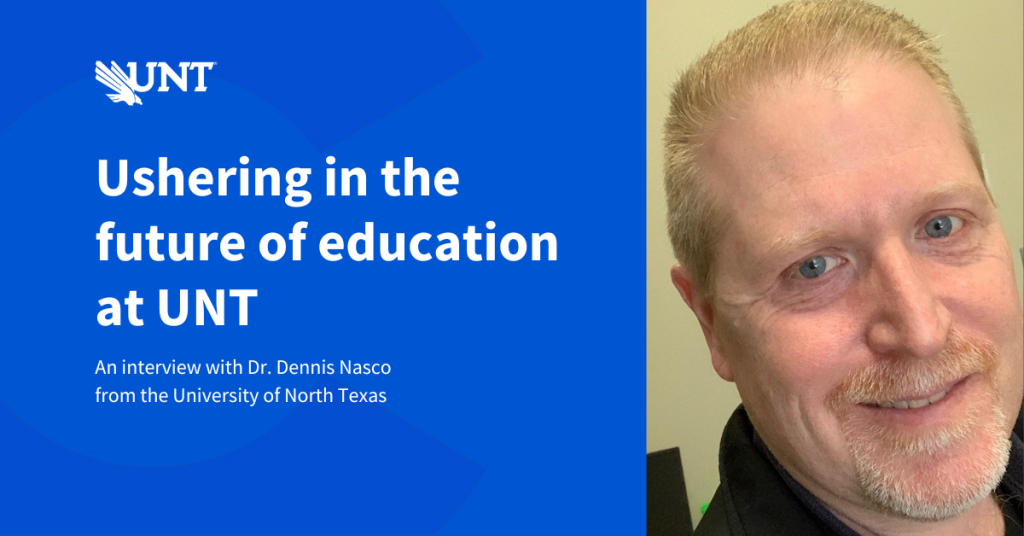
Discover how UNT’s Dr. Dennis Nasco is giving students from a range of different backgrounds the chance to learn at a top-tier institution using Coursera

om shanti : motivational speaker

“If there was a leading edge in education, then this was it.”

Dr. Dennis Nasco

We recently spent time talking with Dr. Dennis Nasco, a passionate educator with over twenty years of experience teaching at the university level. When the pandemic changed the face of education, Dr. Nasco was one of the first to consider Coursera as an option for students to continue their studies. Since then, he’s taught thousands of learners on the platform with the University of North Texas (UNT) in both the Bachelor of Applied Arts and Sciences and the Bachelor of Science in General Business. We’re thankful that he’s here to share his insights with our community about his teaching experience and his predictions for the future of education. Let’s meet Dr. Nasco!

Dennis, thank you so much for taking the time to talk with us. Let’s start at the beginning–how did you get into teaching?

I always wanted to teach. I got my MBA and had gone out into industry, and it was always my goal to go back. I had an opportunity to do that in the early 2000’s, and was able to get a PhD from Southern Illinois University while teaching. Since I already had a Master of Science in Human Resources Management (MSHRM) and worked a lot in HR, that was the subject area that I was hired to teach in. 

I started teaching professional courses, career courses, human resources and organizational behavior courses. I did that at Southern Illinois University for about 17 years, but after a while, I wanted to do something a little different. We had an undergraduate degree completion program and an MBA program at SIU, so I taught in both of those, and was an adjunct for the University of Illinois’ iMBA program. 

I finally joined UNT during the height of COVID in 2020 and I was eager for more flexibility and to teach online. As an R1 research university, UNT has a great reputation and allows me more professional opportunity and growth. 

How do you think the pandemic affected education worldwide?

When COVID happened, it solidified in my mind that the future of education was changing, and the expectations of what students want in their education was shifting. How universities are going to deliver education is probably never going to be the same moving forward. And I thought that working with Coursera was an opportunity to be at the forefront of this change. 

Could you tell us a bit about your students? What are some of their reasons for getting degrees? 

The demographic of my students are people in their 30s and 40s mostly, with families, working full-time, who have a very specific purpose for why they want to go back and get an education. They’re looking to move up in their current organizations or to make career moves, and they need this degree to facilitate that for them. 

In traditional education, people are 18 to 25 years old and in the process of finding their purpose. Most of my students don’t fall into that category. They’re very specifically looking for a degree to advance themselves and their family, and they need a flexible, high-quality, affordable solution for that. And this is exactly what we’re able to do in the Coursera platform. That puts us in a very unique place. It is truly innovative, the things that we’re doing here, and the steps that we’re taking with Coursera. 

Do the courses that you teach have real-world applicability?

Yes, absolutely. One of the things that we hear consistently from students is they’re actually taking stuff from the courses and applying it to their careers. They see the value immediately in what they’re learning. 

What will it take for someone to succeed in today’s business world?

Businesses today are saying that they need highly adaptable employees. What that means is the business world is in flux – things change much more rapidly than they did in the past. People have to be able to deal with that ambiguity. This is where Coursera fits in perfectly. You can’t just earn a degree and you’re done. You’re probably going to need to go back and earn additional certifications or degrees to remain relevant and to advance in the work world.

How do you envision UNT providing value to online students in the future?

With the Coursera platform, we’re going to see a lot more non-traditional students, a lot of people who are working full-time, have families, and don’t have access to education in the traditional sense. What I see is an opportunity for institutions like ours to move in, create structure, and bring a large-scale, high-reputation institution into the online world. Partnering with a platform like Coursera gives those students access to us, so it’s a great partnership from that perspective. I think that’s key to the future of education. 

Where do you envision your program will be in five to six years?

I truly see us having rapid growth. The number of students that we’ll be able to impact in this program is going to be dramatic. We’ve created a program with Coursera where people who didn’t have access to education before now have that access. To me, that’s really exciting. 

Spoken like a true educator!

Thank you, Dennis, for sharing your insights. We look forward to partnering with you in the future! 

The post Discover how UNT’s Dr. Dennis Nasco is giving students from a range of different backgrounds the chance to learn at a top-tier institution using Coursera appeared first on Coursera Blog.


from Coursera Blog https://ift.tt/iPYO2N6
via IFTTT

Adding skills to apply your knowledge in the real world

om shanti : motivational speaker

This biologist is learning to lead so he can pave the way for science. 

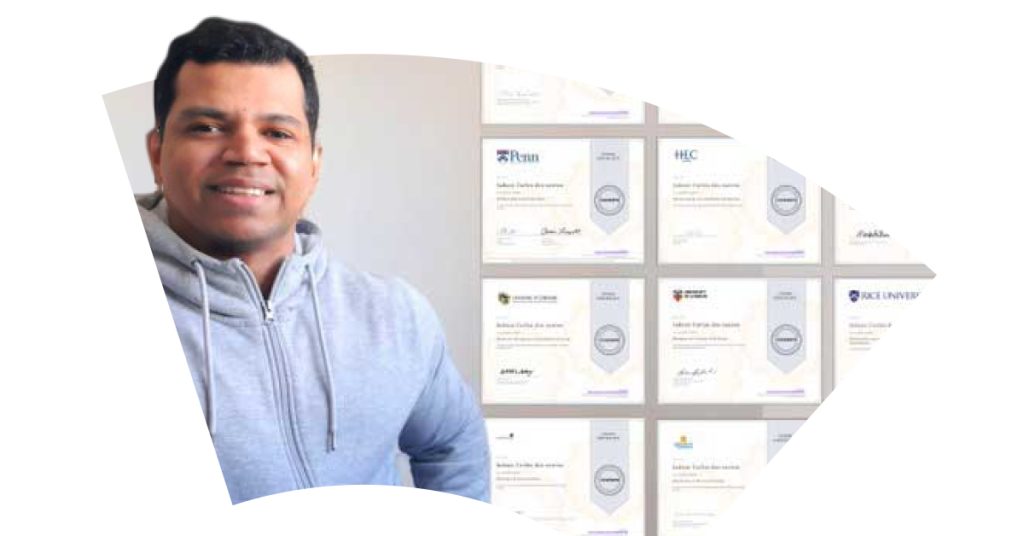
Jadson C. Santos, became a biologist because he wanted to address real-world problems with scientific solutions on a global scale. As an undergraduate, Jadson studied at the University of São Paulo to earn his degree in biology. There, he soon realized it takes more than science to change the world. It takes leadership. 

To complement his bachelor’s degree and pursue his ambitious professional goals, Jadson began learning about culture, diversity, and inclusion on Coursera. As of today, he has taken 41 courses to expand his scientific knowledge and grow his leadership skills. 

Jadson now serves as co-chair of the Career Development Subcommittee at the Genetic Society of America. With all his newfound knowledge, Jadson has created a free mentoring program to help low-income students build career skills. He also writes a newsletter about scientific leadership that has over 7,400 subscribers.

Jadson continues to be an active learner on Coursera, saying, “None of this would have been possible without Coursera and all the knowledge I’ve gained there.”

Jadson is a great example of how you can always add new skills to your existing knowledge and continue to reach even your most ambitious professional goals. If you are looking to learn career-transforming, life-altering, world-changing skills, you too can do it on Coursera. 

“No matter where you want to get to in your life and career, learning will always be part of the journey.” – Jadson C. Santos

The post Adding skills to apply your knowledge in the real world appeared first on Coursera Blog.


from Coursera Blog https://ift.tt/mBYfnae
via IFTTT

Thursday, October 13, 2022

Connecting Google certificates and university Specializations to help learners prepare for in-demand career fields

om shanti : motivational speaker

By Betty Vandenbosch, Chief Content Officer, Coursera

In a recent Coursera survey of university students from around the world, 86% of respondents said earning an industry microcredential would help them stand out to employers and secure jobs when they graduate – a testament to the importance of integrating industry-led learning into a degree curriculum. Historically, however, collaboration between industry and academia has been slow and piecemeal. 

We’re partnering with Google to announce a curated offering on Coursera to prepare learners for entry-level roles in specialized and growing industries, such as construction and sustainability project management, finance and public sector data analysis, and health IT. Learners on Coursera can now choose from five university-taught Specializations in high-growth industries, each designed to align with an existing Google Professional Certificate.

By participating in university and industry learning programs, learners are exposed to both the practical and theoretical knowledge needed for one of these in-demand, specialized roles. The complementary offerings serve students and early-career learners, as well as those who may be further along in their careers and looking to switch to a new track. The curated pairings are as follows: 

  • Data Analytics in Finance from the University of Illinois and Google – Learn foundational skills for a variety of entry-level financial analyst and accountant roles.
  • Data Analytics in the Public Sector from the University of Michigan and Google – Explore data analytics in the public sector, developing skills that can be used in entry-level jobs such as policy analyst and data analyst.
  • Healthcare IT from Johns Hopkins University and Google – Examine the crossroads of healthcare and big data, preparing for an entry-level role such as health IT specialist or healthcare customer support.
  • Project Management in Construction from Columbia University and Google – Help build tomorrow’s infrastructure by gaining skills and tools for entry-level construction management analyst and construction estimator jobs.
  • Project Management in Sustainability from Arizona State University and Google – Prepare to enter the growing “green collar” industry with the foundational knowledge needed for entry-level roles such as sustainability analyst and sustainability coordinator.

“Google is thrilled to offer Google Career Certificate graduates additional pathways to great jobs through our collaboration with Coursera and some of the world’s leading universities,” said Lisa Gevelber, Founder, Grow with Google. “These new courses provide a unique opportunity for people to learn from experts at Google and renowned university faculty to learn the skills  needed for growing industries.”

Upon completion of any of the Google certificates, learners will be able to apply for relevant jobs at 150 companies in the Google Career Certificates Employer Consortium, including Rocket Companies, Verizon, Deloitte, and of course, Google. The Google certificates also have ACE Credit Recommendation, so learners may be eligible to receive up to 12 credits at a participating college or university in the US, or the equivalent of four college courses at the associate’s degree level.* 

We’re proud to partner with Google and leading universities to help learners quickly develop the skills needed to launch well-paying careers.

Launch your career today with Professional Certificates from Google and Specializations from top universities on Coursera. 

* Each college and university has its own policies around credit for prior learning, including whether or not to accept certificates for credit toward a degree. The ACE Credit Recommendations mentioned here do not currently apply to any of the university Specializations listed above, nor do universities listed here necessarily accept ACE Credit Recommendations.

The post Connecting Google certificates and university Specializations to help learners prepare for in-demand career fields appeared first on Coursera Blog.


from Coursera Blog https://ift.tt/35XBZtH
via IFTTT

Friday, October 7, 2022

Coursera for Government Increases Job Placement by an Average of 27% for Workforce Development Customers

om shanti : motivational speaker

By Kevin Mills, Vice President, Coursera for Government

A new IDC white paper, sponsored by Coursera, explores the benefits and organizational value of workforce development programs provided through Coursera for Government.

Despite initial gains following the onset of the pandemic, the global economic situation is uncertain. The International Labor Organization projects global unemployment has surpassed its 2019 level by nearly 21 million. Workers in low-wage jobs have felt this impact the hardest with global management firm, McKinsey and Company estimating that low-wage workers may comprise 43% to 64% of global workers displaced due to the trends influenced by COVID-19.

Meanwhile, employers are facing an unprecedented shortage of talent trained in digital skills. IDC reports that digital transformation-related IT skill shortages will affect 90% of all organizations by 2025, “costing over $6.5 trillion globally through 2025 due to delayed product releases, reduced customer satisfaction, and loss of business.”

To face these challenges, workforce development leaders are tasked with providing relevant and engaging skills development programs that prepare job-seekers for the in-demand jobs of today and for the jobs of the future.

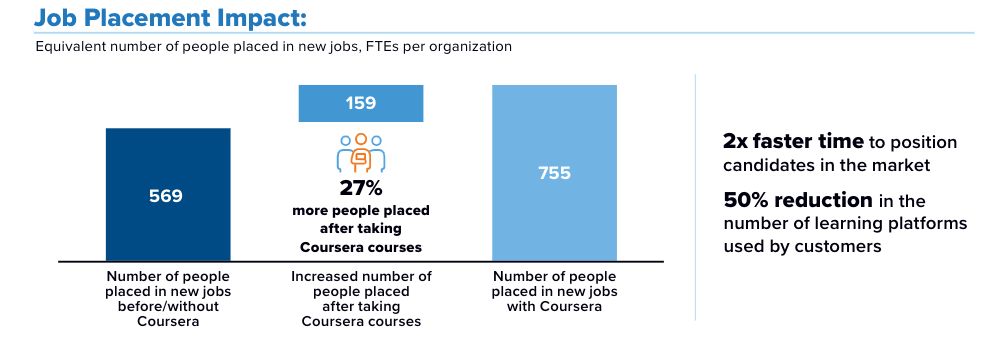
Organizations partner with Coursera for Government to launch large-scale online programs that enable thousands of job-seekers to learn career-relevant skills. Based on interviews with seven Coursera for Government customers, who represent a broad and significant portion of the types of governments currently using Coursera’s services, IDC calculates that these benefits resulted in an average of a 27% increase in job placement among these customers.

The Value of Coursera for Government - Chart illustrating 27% increase in average employment among customers surveyed

While the experiences of each customer and their learners in adopting learning tools and programs may differ based on a number of factors, this report captures the real experiences of a select number of C4G customers at this important and dynamic time, as self-reported to IDC.

Additional benefits include:

  • Lowered training costs: The Coursera for Government customers interviewed reported a 50% reduction in the number of learning platforms used to meet their workforce development needs. 

  • Job-seekers trained in less time: One organization reported that candidates were ready for the job market in half the time compared with other learning programs, while another reported that learners were able to shorten the time to complete courses from 24 weeks to 6 weeks. 

  • Learner-reported career benefits: According to another organization, 80% of learners reported career benefits from Coursera such as increased confidence to switch to a different field, increased opportunities for promotions, and an increase in interviews secured.

  • High learner satisfaction: On average learners enrolled in the programs of the Coursera for Government customers interviewed provided courses with a rating of 4.8 out of 5 with one organization reporting that 90% of learners plan to continue using Coursera to build their career pathways.

The COVID-19 pandemic likely impacted the effects of learning and learning outcomes. For example, displaced workers may have had more time to complete online training programs and a greater number of jobs relying on digital skills taught by such programs may have been available. 

However, the experience of these Coursera for Government customers demonstrates the value of quality online skill development programs, particularly at a time when these services are greatly in demand by governments and citizens.

As one Coursera customer interviewed by IDC shares, “Coursera is a valuable gateway back into learning.”

Read the full IDC white paper on Coursera for Government here.

The post Coursera for Government Increases Job Placement by an Average of 27% for Workforce Development Customers appeared first on Coursera Blog.


from Coursera Blog https://ift.tt/qaUIzLl
via IFTTT

Wednesday, October 5, 2022

Coursera appoints COO and CRO in new executive leadership structure

om shanti : motivational speaker

By Jeff Maggioncalda, CEO Coursera

In 2017, I came to Coursera for the same reason that has attracted over 100 million learners, 275 university and industry partners, and 7,000 institutions to our platform to date: a fundamental belief in the power of education. We’ve made substantial progress by embedding this belief within our mission and our commitment as a Certified B Corporation to transform lives through learning.

As the world continues to change, a new era of learning and work is emerging. And we’ve continued to expand the products and services we offer and the regions in which we operate to help more and more learners advance their education, careers, and ultimately, thrive in this new digital economy. To meet the demands of this evolving landscape, I’m excited to announce a few changes to our organizational structure that will simplify how we operate to serve customers and grow the business.

Effective Oct. 1, 2022, Shravan Goli, formerly Coursera’s Chief Product Officer and Head of Consumer Revenue since 2018, has assumed the role of Chief Operating Officer. Combining product management, engineering, design, data, services, and business operations under one team, Shravan will be responsible for delighting customers with an end-to-end learner, customer, and partner experience and doing so with operational excellence and leverage.

Additionally, Leah Belsky, formerly Coursera’s Chief Enterprise Officer and a Courserian since 2015, has assumed the role of Chief Revenue Officer. With formal organizational responsibility for overall revenue, Leah will be responsible for managing our three segments – Consumer, Enterprise, and Degrees – enabling Coursera to more effectively identify and pursue opportunities for global revenue growth across segments and regions.

As we continue to grow and expand the size and scope of our business, this structure will help simplify and clarify the responsibilities for creating products and services that meet the needs of our customers and managing revenue growth. Shravan and Leah have been driving forces of Coursera’s growth for several years, and we’re excited for them to step into these critical leadership roles.

The post Coursera appoints COO and CRO in new executive leadership structure appeared first on Coursera Blog.


from Coursera Blog https://ift.tt/QWhDBA2
via IFTTT

Tuesday, October 4, 2022

How to Accelerate Economic Growth with Digital Skills

om shanti : motivational speaker

Accelerating Digital Skills cover image - an office worker leaning on a desk

By Kevin Mills, Vice President, Coursera for Government

Today’s employers are tasked with filling vast amounts of roles within their companies. However, Europe’s Digital Economy and Society Index reports that nearly 60% of employers say they are struggling to find the right people to fill available jobs. Meanwhile, 75% of workers surveyed by Salesforce in 2022 admitted they did not think they had the right skills for a digital-first world.

Furthermore, many workers now find themselves in roles that are increasingly vulnerable to shifts in the labor market, a situation that threatens to increase inequality and poverty globally.

We’ve seen first-hand at Coursera how workforce development leaders worldwide are developing reskilling programs that deliver digital skills training, prepare workers for in-demand roles, and provide opportunities to underprivileged or marginalized groups.

For instance, in 2021, Barbados partnered with Coursera to launch the National Transformation Initiative (NTI), which helped to upskill thousands of citizens through online training—and provided 20,000 scholarships for Barbadian women, many of whom did not have a degree.

Building on the lessons we’ve learned from partnerships with organizations like NTI and insights surfaced from our recent Global Skills Report 2022, I’m excited to announce the launch of The Great Reskilling: How to Accelerate Economic Growth with Digital Skills.

In this new e-book, we explore how digital skills training can be an effective way for workforce development leaders to make their communities more attractive to employers and to change the lives of their community members for the better.

Digital skills have never been more in demand. Microsoft estimates up to 149 million new technology-related jobs could appear by 2025 in fields such as advanced IT, computer programming, and scientific research and development. By learning digital skills now, workers can access jobs in different fields with better pay and prospects, participate in the global digital economy, and potentially reduce the risk of their jobs becoming automated by as much as 59%.

In this e-book, workforce development leaders will discover:

  • How digital skills training can address inequality and unlock the full potential of job seekers’ existing skillsets
  • How to prepare job seekers for entry-level, in-demand digital roles that pay more and offer more opportunities for advancement and personal growth
  • How to build impactful reskilling strategies that are driven by data on regional and global learning trends

Looked at together, the stories and experiences in this e-book can serve as a helpful resource for workforce development leaders as they continue to provide their constituents with the skills needed for the labor markets of today and tomorrow.

Download The Great Reskilling E-book

The post How to Accelerate Economic Growth with Digital Skills appeared first on Coursera Blog.


from Coursera Blog https://ift.tt/xzqg0ID
via IFTTT

Friday, September 23, 2022

What does it take to succeed in a Data Science Program?

om shanti : motivational speaker

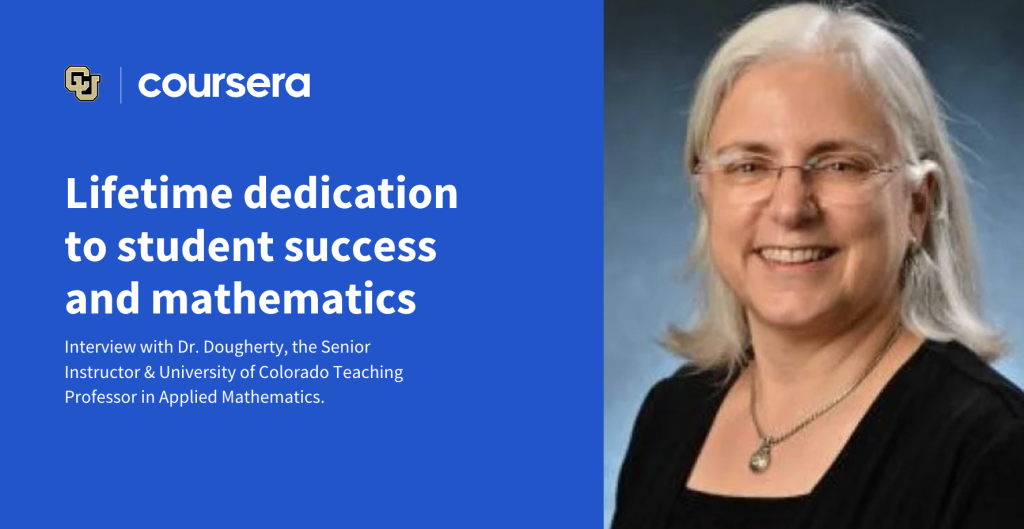
Meet Anne! She’s the Senior Instructor and Associate Chair at the University of Colorado, Department of Applied Mathematics, and has been an educator since 1984. This semester, she’s teaching a Foundation for Data Science course on Coursera and was kind enough to offer four tips to learners interested in the field of Data Science.  

Self-motivation

Anytime you’re learning online, you need to be self-motivated. You have to really want to spend the time on the material. It helps if you have an end goal in mind – a specific type of job – or you want to move into a new field. 

Knowledge of Mathematics 

This material can be challenging, but we’ll work with you and we try to help you get to that Aha! moment where you start to see how the various topics that we’re covering are connected. At the most fundamental level, the language is mathematics. If you understand that language, then you’re able to create all sorts of stories in whatever field you’re interested in. That applies to every technical discipline. Data science is not an impossible field, but it does require a good understanding of mathematics and a willingness to learn new material. So you really need to be successful from a mathematical standpoint. You need to have a good understanding of calculus One and Two and some linear algebra, even in the introductory courses in the statistics and data science track. 

Determination

As a student in a program like this, you have to find a way to balance life, work, and school. Learners have had family issues come up, and we’ve made accommodations for them. With Coursera, we’re able to offer you flexibility that you won’t find at a traditional institution. That’s what allows you to receive an education while managing work and family. In the long run, your success will result in an increase in self-confidence and self-worth, and you’ll gain new skills that you can apply in your current job, or to move to a different job. 

Self-awareness

I always tell students that you need to follow your interests. Be interested in the area. You shouldn’t do it because you think it’ll get you a better job. That’s an excellent byproduct, but if you’re not truly interested in the material, I think it’s really hard to make that long term commitment to go through this program. If you really like the material and you’re curious about it however, I think it’s a great program at an absolutely top notch university, and can really help set you up for success down the road. 

Thanks so much, Anne!

We hope you enjoyed hearing from Anne as much as we did. If you’re interested in learning data skills and possibly earning a credential, check out the Probability Theory: Foundation for Data Science course – part of the Data Science Foundations specialization available on Coursera. You’ll learn the foundations of probability and its relationship to statistics and data science from leading industry professionals like Anne. 

The post What does it take to succeed in a Data Science Program? appeared first on Coursera Blog.


from Coursera Blog https://ift.tt/dHy1Ruv
via IFTTT

Join the ranks of future digital leaders with the Digital Transformation Certificate from Dartmouth

om shanti : motivational speaker

With the Digital Transformation Certificate from the Thayer School of Engineering at Dartmouth, you can become a digital transformation leader with the skills to deliver high-impact organizational change. To celebrate the launch of this new certificate, we’re hearing from two learners who enrolled in the program’s first cohort in January 2022.  

Marcin Dembowski, an Organizational Transformation and Change Specialist based in Poland, enrolled in the Digital Transformation Certificate to deepen his understanding of corporate innovation challenges  and digital transformation. “I work in change management consulting in the academic publishing business, and privately, I’m very much involved in real estate business and residential estates building projects. When I noticed that Dartmouth College was planning to offer comprehensive certificates on the Coursera platform starting in 2022, I enrolled straightaway.”

“Digital transformation is a real challenge for organizations and, unfortunately, not many know how to handle it,” said Marcin. “Many companies are mainly focused on the technical part of it, completely ignoring other aspects.” 

Natasha Vincent, the Director of Partnerships for a national health charity, also enrolled in the certificate in January 2022. Her goal was to leverage her interest in technology and coding as part of either senior leadership or executive teams. “The intersection between communications, health, and technology is where I thrive. Enrolling in this program was a terrific way to learn about digital transformation from a variety of angles ranging from case studies to coding.”  

In today’s current world, it’s not a matter of if (or even when) learners should begin focusing on digital transformation. It’s a matter of how. 

According to McKinsey’s 2021 report, The New Digital Edge: Rethinking Strategy for the Post-Pandemic Era, 89 percent of top executives believe that by 2023, they will need to build new digital strategies or implement existing technology to stay competitive. Building up the necessary skills to help carry out this digital transformation is key for learners looking to seize new market opportunities in the future. 

That’s where Dartmouth’s certificate comes in. Over four courses, you will learn how to harness AI, machine learning, and design solutions to implement strategies in your organizations to boost innovation and streamline operations. 

“The program is very comprehensive and delivered very well, all four subjects,” said Marcin. “Of course, having a chance to watch the live session with Professor Geoffrey G. Parker, academic guru of the platform business strategy, was an extremely valuable experience.” 

When we asked our learners to offer one tip for students who are starting the certificate program, Natasha told us, “Polish up on your Python and people skills. Python will help you get up to speed with the coding aspect of the program, and people skills will help you interact with all of the fascinating students you will be meeting around the world during your group projects.”

Marcin had this to add: “If you decide to start the program, dedicate as much time as possible. Watch all videos carefully and make notes, read all that is recommended, and participate in office hours. This is just the beginning, so the more you invest, the more you get back.”

The post Join the ranks of future digital leaders with the Digital Transformation Certificate from Dartmouth appeared first on Coursera Blog.


from Coursera Blog https://ift.tt/u7NGFvA
via IFTTT

Thursday, September 22, 2022

Discover how Luis Plata was able to gain a master’s and certificate while working full time

om shanti : motivational speaker

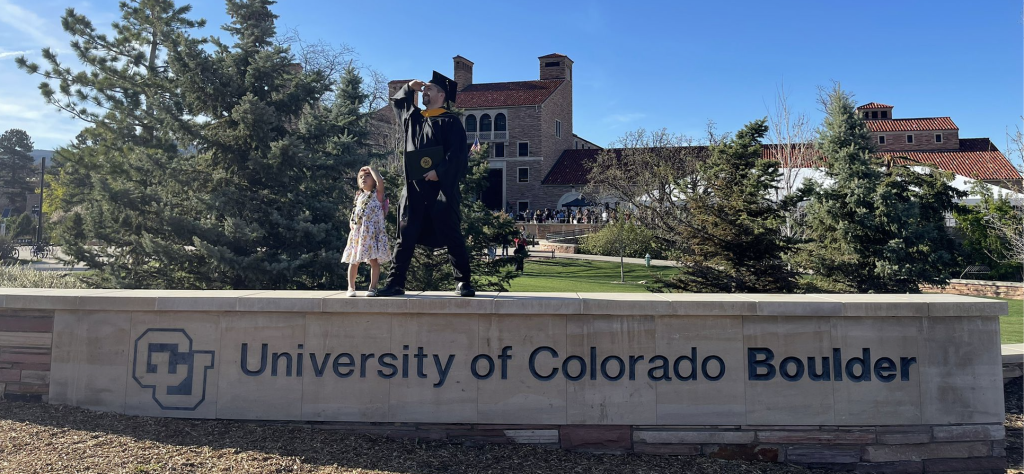
Luis Plata was a senior mechanical engineer before joining CU Boulder’s MS-EE on Coursera Program. In January 2021, Luis obtained the Internet of Things Certificate on Coursera, and in December 2021, Luis graduated from the MS-EE program and was able to attend CU Boulder’s May 2022 graduation ceremony. Read more to learn about his experience with the MS-EE program!

When did you enroll in the MS-EE on Coursera Program?

I enrolled in the summer of 2020, in the middle of the second summer semester.

Were you in the non-credit version prior to enrolling in the for-credit version?

I attempted the free course for the sensor course, and I was hooked and wanted to pursue this further.

What was your educational and work experience background before you enrolled in this program?

I was in a multidisciplinary role, I did quite a bit of mechanical engineering, software engineering, but a big focus of my role was in electrical engineering and so it felt very natural to continue to pursue that in an academic way and solidify my background understanding. 

What attracted you to this program in the first place? 

Definitely the content. I felt the content offerings at the time and what they were advertising for the future was very attractive. To give you an example, one of the pathway courses, the Sensors and Motors courses, was basically what I was doing in my career at the time. I was able to take a lot of what I was doing in my Day-to-Day career and really be able to see a lot of background information I didn’t have, things that I learned while doing on the job, later I was able to go through the lecture and see why that works that way. Seeing the quality and extent of the content was a big selling point for me. Second big selling point was that it was an online, asynchronous master’s program. There’s a lot of master’s programs out there for softer sciences and for computer science with this set up but for Electrical Engineering not so much. When I first saw it, I wondered why there aren’t that many out there and how CU Boulder is pulling it off but when you see what exactly is being taught in these courses you understand why this was a good thing and why it worked for me at the time. 

What are your thoughts about performance-based admission?

I did not know about this before starting. I took the first course (free Sensors Course) and began reading through the website and it became apparent. At first, I was confused because it was not traditional. I am aware of a couple more programs that are doing this now, but it was not something I was accustomed to at the time. So, to be able to really jump at it without having this soft barrier of entry was helpful. It really made it easier for me to see the value of the program without having to consider, do I really want to pay this application fee for something I might not get into. 

I think what really helped sell that it was real for me was that it was during the pandemic and a lot of places were getting rid of GRE requirements and that type of set up. 

The performance-based admissions were very useful in getting started and being able to tell this is something I want to keep doing. 

How did you learn/hear about CU Boulder’s MS-EE on Coursera Program?

I was researching remote and asynchronous opportunities in the field I work in. I previously worked in a multidisciplinary environment. I wasn’t really sure what I wanted to do but knew that electrical engineering was definitely an option. While I was exploring my options from reputable companies, I came across Coursera and all the different degree options available, including Electrical Engineering, which is a topic I particularly enjoy and had previous experience in which is why I choose to pursue that.  

Can you tell me how the MS-EE on Coursera program fits into your life?

I think this is the greatest strength of the program, the fact that it is asynchronous and has the flexibility that has allowed me to succeed. It would have been extremely difficult to go through a traditional program where I know I would have to be at school at a certain time and work around having a career and a kid. Let me give one example of this. Not all courses were good for this but many courses I would have the lecture playing in the background while commuting to work and when I get home and my kid is asleep, I could listen to it a second time and I can really pay attention and am no longer hearing it the first time so the content can get really deep in my mind and I am really understanding it much better that way. 

What are your favorite parts of the program?

There is so much. One of my concerns starting this program with it being remote, especially at the master’s level, was how much collaboration and interaction am I going to be able to have with classmates, but that was not something I felt I was lacking as I was going through the program. The Forums and use of Slack really helped create a sense of community, such as there are a lot of other students struggling with the same problem I am, and we can all get in together and chat about it. The availability of the course facilitators was also great, to be able to know that there was always someone there so I can hop online, and someone will be there to help me with whatever problem or roadblock I am facing, was a great part of the program for me.

I really enjoyed the Sensors courses, but I am biased towards them as that was what I was doing, so I could really immediately see I am reading about temperature sensors and tomorrow I am going to go to work and install some temperature sensors and so that worked great. 

The battery management courses were fantastic. I really enjoyed these courses. I thought the professor was really engaging and the material was very interesting, especially how it relates to all the changes in technology that we are seeing nowadays. Plus, the assignments were particularly enjoyable, as far as not only learning about the content but also applying it, there was quite a bit of software involved with it and I enjoyed this interaction between the two. Knowing how to do Electrical Engineering and applying it by writing software.    

I also enjoyed the Optics course, but I have a personal bias as there was a project, I was working on at work that wasn’t going anywhere and we couldn’t figure out why and then I learned why through the optics courses, there was some fundamental issues that my team just didn’t have the background knowledge. I was able to go back to work and say “this is why that project failed, we had this incorrect assumption.” 

What do you hope to do with your MS-EE degree?

Career changes and advancements have already materialized which is great for me and my family. One of the courses that I learned, developing industrial internet of things specialization courses, the professor, David Sluiter, one of things he talked about was getting the project management professional certificate. He talked a lot about how those fits into the general realm of project engineering. I saw that as a great thing to pursue and so I went out and I got a PMP and using my Master of Science in Electrical Engineering plus the certification that I learned about through the program, I was able to pursue the job I currently work at, at Boeing as a Project Engineer. It was really a great step up in my career at that point. If I hadn’t made that switch, I know I would have been able to use this degree to advance at my previous employer too.

Would you recommend this program to others? Why or why not?

I actively recommend this program to anybody that I feel may be interested in, pursuing, or is looking into something like this. The content is fantastic, I learned a lot, and the flexibility of having an asynchronous program, and really being able to fit it into a busy schedule was enabling. It would have been difficult to do otherwise. 

The performance-based admission part of it is something that really opens a lot of doors for people like me who didn’t really have them before. I didn’t complete my bachelors before this program. I was really close to finishing and I started my career and was not able to finish it before because I could not fit in going to school at a traditional program and work full time, which I needed to do at the time and so the performance-based admission was life changing for me.  

What is one tip you have for students who are starting?

Take your time. Beyond the fantastic content, the great instructors, the name that CU Boulder has, at the end of the day, you have got to use whatever tools and advantages you have and the biggest one with this program is the flexibility that this program allows you to have. So, take your time. There is no shame in taking it one course at a time.

The post Discover how Luis Plata was able to gain a master’s and certificate while working full time appeared first on Coursera Blog.


from Coursera Blog https://ift.tt/VWPROvp
via IFTTT

Tuesday, September 13, 2022

Stack your way to an MBA

om shanti : motivational speaker

We are excited to announce that when you complete the 1-year online Master of Science in Management (iMSM) program from Gies College of Business at the University of Illinois Urbana-Champaign, your credit hours can be applied directly toward the online Master of Business Administration (iMBA) program if you are accepted to the program.

This is the first time in the history of the University of Illinois that a degree can stack into another degree, and it’s one of the very rare examples of this being done at any business school in the country. With the implementation of this new stackable model, you can complete the iMBA program with greater flexibility while balancing higher education with a job, family, and personal life.

Join a top-tier public U.S. university and take advantage of the opportunity to pursue higher education while advancing your career. As a leader in business education committed to creating life-changing accessy, Gies offers some of the most affordable online graduate business degrees from any major university.

Earning a graduate degree or career credential from a highly regarded institution like the University of Illinois can be transformative for both your life and career. We are eager to open the door for more learners and to deepen our partnership with Gies as we strive to support learners across the globe.

The post Stack your way to an MBA appeared first on Coursera Blog.


from Coursera Blog https://ift.tt/aLB0rWb
via IFTTT

Thursday, September 8, 2022

Discover how UNT graduate, Steven Schmidt earned his bachelor’s while working full-time

om shanti : motivational speaker

After earning his culinary degree in Washington, Steven Schmidt went to work as a chef at the University of North Texas. There, Steven also enrolled in the online program for the Bachelor of Applied Arts and Sciences (BAAS) from UNT in the fall of 2020.

After earning his culinary degree in Washington, Steven Schmidt went to work as a chef at the University of North Texas. There, Steven also enrolled in the online program for the Bachelor of Applied Arts and Sciences (BAAS) from UNT in the fall of 2020.

Steven chose UNT for its prestigious reputation. And along with learning from the respected faculty of UNT, Steven has also enjoyed doing group projects on Coursera with students in his program from across the country and the world.

With the flexible online learning experiences offered by his program through Coursera, Steven has been able to keep his commitments to his job and be present at home with his family. He even notes how his daughters sometimes join him around the table at home so they can all do their schoolwork together. He says with other programs, he would only be able to take one course a semester.

During his time in the BAAS program, Steven has also been promoted in his job. He’s now the Culinary Operations Chef at UNT and he plans to eventually get his master’s from UNT as well. Steven credits his time-management skills for his personal and professional success so far. His tip for students starting the program is, “Set your schedule and stick with it.”

If you’re a working professional who’s interested in getting your bachelor’s degree from a highly regarded institution, you’ll find the flexibility to do it with the BAAS program from UNT. Apply today and see just how successful you can be.

Learn more about the University of North Texas BAAS program

The post Discover how UNT graduate, Steven Schmidt earned his bachelor’s while working full-time appeared first on Coursera Blog.


from Coursera Blog https://ift.tt/fHAO5pw
via IFTTT

An interview with future iMSM graduate, Manmit Kaur

om shanti : motivational speaker

Manmit excelled at her career as a project manager. She was organizing conferences all around the world for global leaders in both the private and public sectors. But while her career was exciting, it was also very stressful. And, ultimately, Manmit felt that management consulting was her true calling.

Earning a master’s in management had been a personal goal for Manmit because of her interest in consulting, but she kept putting it off. That changed at the start of the pandemic when Manmit saw an opportunity to continue her education while spending more time at home. By the spring of 2021, she had started her online Master’s in Management (iMSM) from Gies College of Business at the University of Illinois Urbana-Champaign (UIUC).

Manmit chose the iMSM for its in-depth subjects, as well as its flexibility and affordability, and she’s learned empathy and leadership skills that she’s sure she’ll use for the rest of her career. Manmit has found the program both challenging and fun—with highly engaging and supportive experiences in live classes, group work, and forums. And, with the global access that Coursera offers, Manmit has been able to enjoy her fellow learners’ diverse thinking and backgrounds.

Gies College of Business students like Manmit can also be part of Illinois Business Consulting (IBC). This management consultancy is the largest in the US to be operated by students, and Manmit will have the opportunity to work on real projects for real clients around the world so that she graduates with incredibly valuable experience.

Manmit says she has had to find a new flow to life in order to earn her MSM. But with support from her family, she has taken the time to continue her education. Now, with graduation on the horizon, she’s about to take on her true calling of consulting. To others who want to go from liking their career to loving their career, Manmit says, “Take the plunge. You owe it to yourself.”

Explore the iMSM from UIUC and other programs today on Coursera.

Learn more about Gies College of Business iMSM program

The post An interview with future iMSM graduate, Manmit Kaur appeared first on Coursera Blog.


from Coursera Blog https://ift.tt/NSUHQec
via IFTTT

Tuesday, September 6, 2022

Coursera partners with NESCOT to enhance UK further education teaching quality and help drive national technical skills agenda  

om shanti : motivational speaker

by Anthony Tattersall, Vice-President for EMEA, Coursera

As the United Kingdom’s further education sector seeks to empower learners to thrive in the digital economy, collaborating to scale up the delivery of high-demand technology, business, and data science skills is essential. To help support the UK’s further education strategy, we are excited to announce that we are partnering with North East Surrey College Of Technology (NESCOT), to both enhance and expand teaching delivery, and to prepare the college’s 9000 students for in-demand careers in the digital economy. 

With NESCOT being a partner in the new Coast to Capital region’s Institutes of Technology, access to Coursera will support the college’s aim to deliver a wider range of advanced technical qualifications and higher education courses. NESCOT’s staff will have access to the full Coursera catalogue, including 22 entry-level professional certificates offered by Google, IBM, Meta, and other leading industry partners. The partnership will thereby create additional opportunities for NESCOT’s staff to develop the skills needed to deliver courses on high-demand technologies including AI, data science, engineering and software development.

Coursera is doubling down on its efforts to support the nation’s further education strategy, with the UK government increasingly investing in its new T Levels programme, and with participation in adult government-funded further education having increased by 4.6% over the past year.

The partnership with NESCOT builds upon Coursera’s relationship with the TEC Partnership, one of England’s largest providers of further and technical education, to expand its contribution to the UK’s further and higher education sector. It will do so by filling curriculum gaps, expanding NESCOT’s provision of job-aligned vocational courses, and bridging the gap between student skills and employer needs. 

By empowering faculty professional development and bridging this gap, Coursera and NESCOT seek to narrow the UK’s technology and data science skills gaps. The 2022 Global Skills Report, released in June by Coursera, found that the United Kingdom’s technology skills proficiency continues to lag behind a majority of European nations, ranking 42nd globally for technology skills, and 24th among the 33 European nations indexed in the report. 

Coursera currently supports the skills development of 2.75 million UK learners. UK institutions already partnering with Coursera include Imperial College London, Queen Mary University of London, The University of Edinburgh, University of Glasgow, University of Leeds, University of London and the University of Manchester. UK learners are able to access 2,500+ Guided Projects, 5,000+ courses, 625+ Specializations, more than 75 Certificates (of which 22 are Entry-Level Professional Certificates), and 35+ degrees. In the first eight months of 2022, UK learners spent more than 1.1 million hours upskilling and reskilling on Coursera’s platform.

We look forward to supporting NESCOT’s faculty to deliver high-quality, job-relevant skills training to their students, and to evolve the college’s blended learning provision.

The post <strong>Coursera partners with NESCOT to enhance UK further education teaching quality and help drive national technical skills agenda  </strong> appeared first on Coursera Blog.


from Coursera Blog https://ift.tt/GKJliWp
via IFTTT